About OTC CatchUp

|
OTC CatchUps are weekly informal sessions involving project showcases and technical discussions. They are held every Saturday from 10:30 PM IST. Join in!. For all summaries, please visit catchup.ourtech.community/summary. |
OTC CatchUp #282
Authors: Alpesh Bhagwatkar · Ankush Kapoor
Date: 04-04-2026
Duration: 1 hr 55 mins
Topics Discussed
-
The group reviewed leaked Claude Code source and discussed practical internals instead of leak drama, especially around output quality, context retention, and failure modes.
-
The discussion covered turn-level
CLAUDE.mdreinjection, skeptical memory (verify-before-act), shared prefix prompt-cache behavior across sub-agents, and context-compaction heuristics under long sessions. -
It was noted that cache invalidation vectors (mode toggles, model switches, and context mutations) can reduce cache reuse and increase effective token burn.
-
The group also discussed benchmark/harness claims (including Terminal Bench deltas) and references to Open Code-style behavior in implementation details.
-
Practical ideas inspired by the review included proactive-message budget caps, semantic memory merging with a local LLM, regex-based frustration detection, prompt-cache hit-rate telemetry, and adversarial verification as a separate agent phase.
-
Rudraksh and Darshan discussed claims around leaked Claude Code internals, including prompt-denial patterns, user-acceptance/permission flows, and how the assistant may infer intent from prior interactions and file/context clues.
-
The group discussed AI memory and context architecture, token usage trade-offs, and how tool calls (including OCR/image extraction and document parsing) can affect total token cost.
-
-
Darshan and Siddhesh discussed input systems in UI frameworks, including hit testing, cursor/touch coordinate handling, and how applications map low-level signals to higher-level UI actions.
-
The conversation covered press/down/up event flows, long-press timing thresholds, drag detection, and multi-touch interpretation based on distance and movement.
-
-
Rudraksh shared his workflow of using Gemini for brainstorming and parts of frontend work, Opus for planning, and Sonnet for backend implementation.
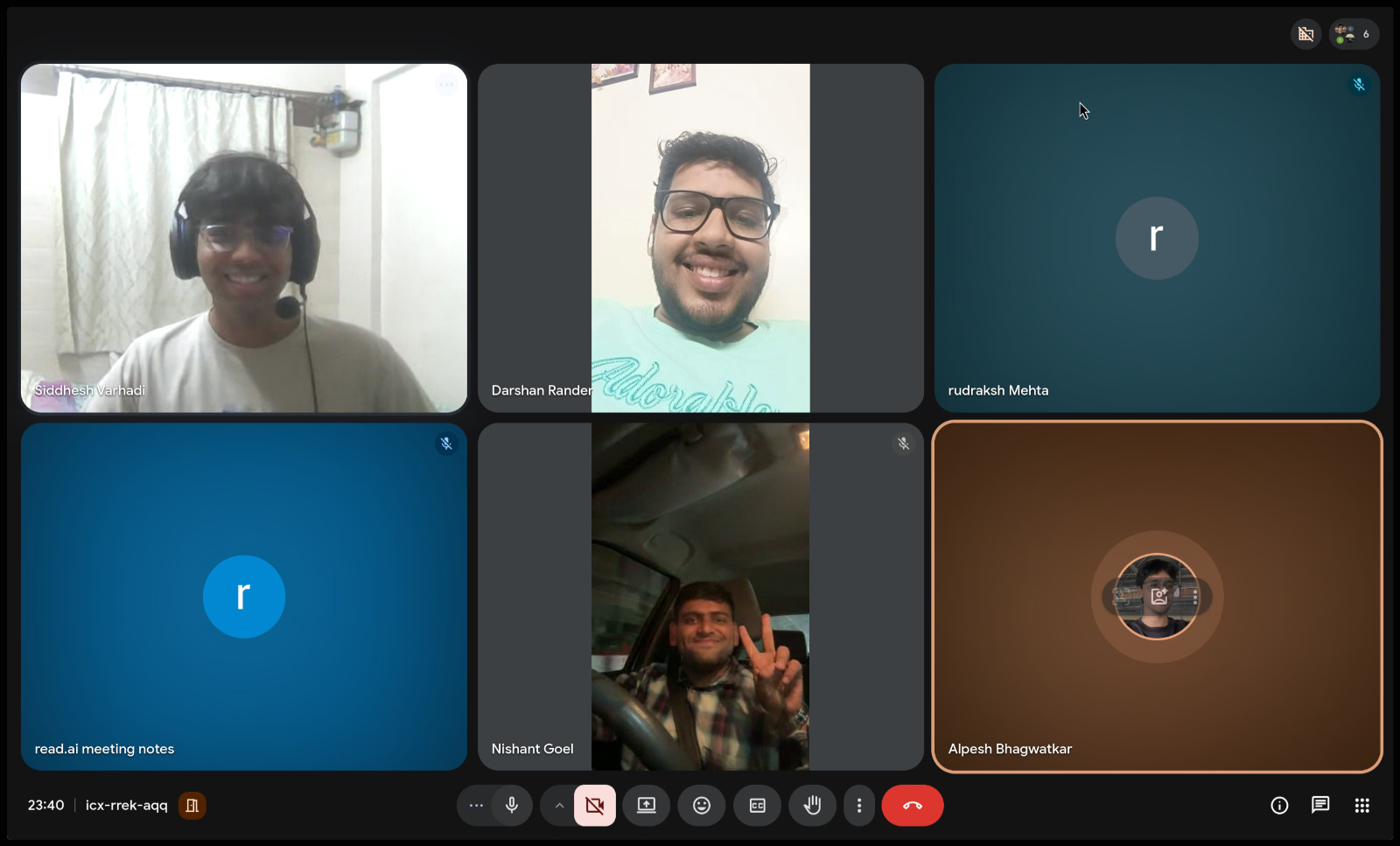
Meet Screenshot
|
|
For all summaries, please visit catchup.ourtech.community/summary. |
Want to improve the content of this page?
Want to get more involved? Learn how to contribute.
We rise by lifting others.
Kindness always wins.
Alone we can do so little; together we can do so much.